

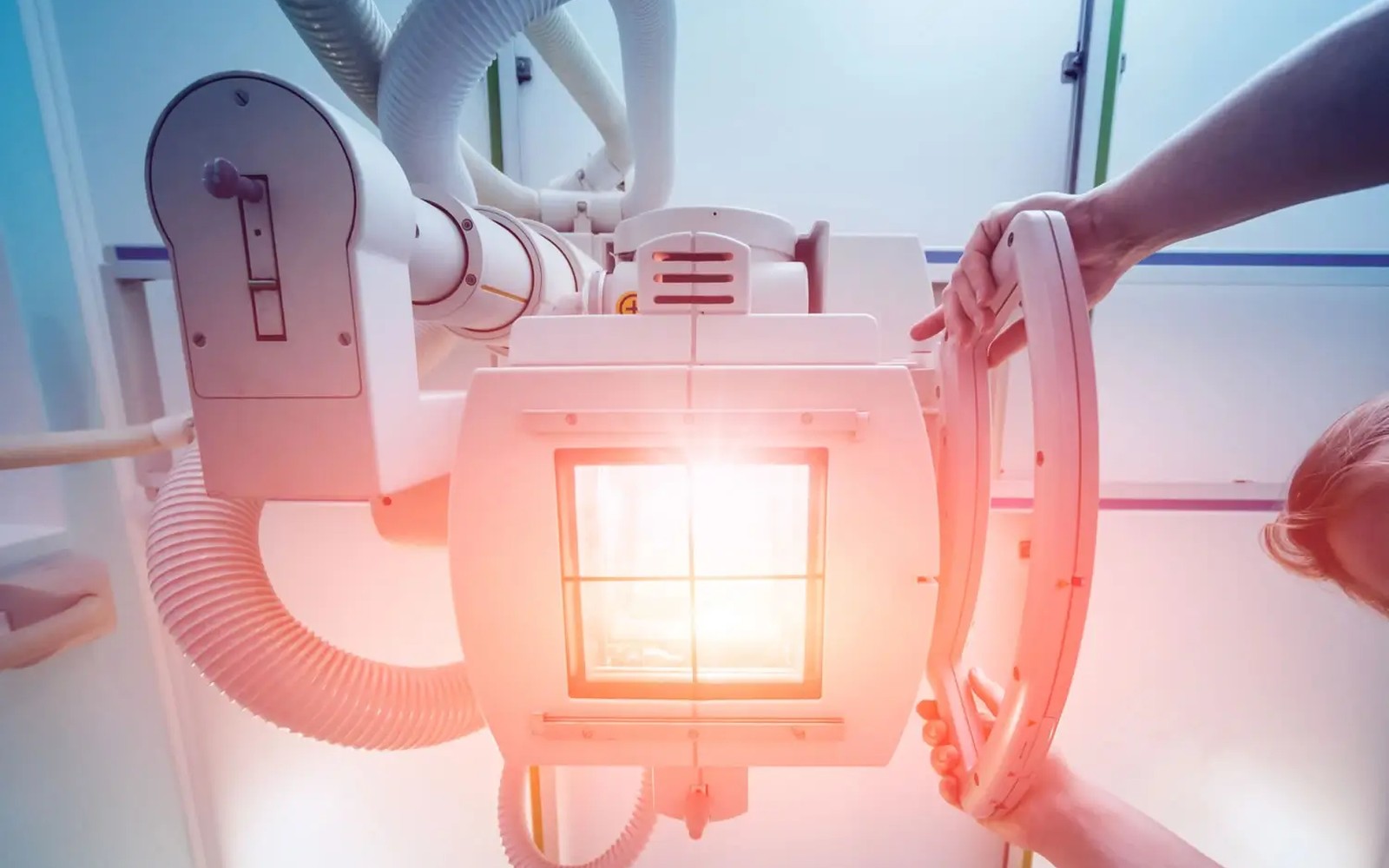
Fixed x-ray rooms are the backbone of high-volume imaging operations. A ceiling-suspended tube, a motorized or manual radiographic table, and a fixed wall-stand detector together form a dedicated room that handles general radiography exams without competing for a portable unit or a shared C-arm. Once the room is up and calibrated, it runs exams with a speed and consistency that freestanding or portable equipment cannot match at sustained volume.
Pricing for fixed x-ray systems spans a wide range depending on the detector type, generator capacity, and whether the table is motorized. A basic fixed room with an analog-to-DR-converted configuration might be acquired for $80k-$100k used. A new two-detector room from a major OEM with a motorized floating-top table runs $160k-$250k or more before construction and shielding. That total project cost is exactly what we finance, because waiting to accumulate it in cash means months of delayed exam volume.
We structure fixed room financing for hospital radiology departments, independent imaging centers, orthopedic groups, and urgent care operators expanding to in-house imaging. The minimum is $50k and most fixed room projects land in the $100k-$250k range, well within our application-only threshold.
Components of a Fixed X-Ray Room
A fixed x-ray system has more components than the OEM quote sometimes suggests. The primary equipment is the generator, the x-ray tube and suspension system, and the detector or detectors. A standard two-detector room has a table detector and a wall-stand detector, each typically a 14x17 or 17x17 inch flat panel. The generator drives both, and the tube suspension hangs from a ceiling track that allows positioning flexibility across the full table length.
Beyond the primary equipment, the room requires radiation shielding in the walls, ceiling, and door. Lead equivalency is determined by a qualified medical physicist based on the generator capacity, expected weekly workload in mAs, and occupancy of adjacent spaces. For a new room buildout, the shielding design and installation, electrical work, and radiation protection survey add $20k-$60k to the project cost depending on facility configuration. We finance hard and soft project costs when they appear on the vendor or contractor invoice alongside the equipment.
Digital acquisition hardware links to PACS through a DICOM interface. Some older facilities still run the x-ray generator on a separate network segment from PACS, which requires a DICOM gateway. That integration cost can also be included. For facilities adding a second fixed room to an existing PACS, the incremental cost is lower because the archive and reading infrastructure is already in place.
The x-ray generator is worth specifying carefully. High-frequency generators produce a more consistent x-ray spectrum than older single-phase or three-phase designs, which means better image quality at lower patient dose. Most new rooms ship with high-frequency generators; refurbished rooms may carry older generator technology that affects image quality and dose efficiency.
Typical Terms for Fixed Room Financing
Fixed x-ray rooms are long-lived assets. A well-maintained room with periodic detector and generator service can produce diagnostic-quality images for 15 years or more, though software support and compliance with evolving dose standards may require component upgrades along the way. Financing terms for fixed rooms typically run 60 to 84 months, matching the asset's productive life. A 72-month term on a $200k fixed room project distributes the cost across six years of exam revenue.
Practices that anticipate technology upgrades on a regular cycle often prefer a fair market value lease structure, which keeps the monthly payment lower and preserves the option to refresh the room at term end without carrying depreciated equipment on the balance sheet. Practices that want to own the asset and capture the full tax depreciation benefit typically choose a $1 buyout lease or a standard equipment loan, both of which result in ownership at term end.
Section 179 and bonus depreciation both apply to x-ray equipment in most structures. The equipment must be financed under a qualifying structure and placed in service within the applicable tax year. We can align the transaction close date with the practice's tax year if timing matters.
Market Context for Fixed Room Investment
Hospital outpatient volumes and independent imaging center growth have sustained demand for fixed radiography room capacity over the past decade. The shift of imaging from inpatient hospital settings to outpatient and ambulatory environments has driven construction of new imaging rooms in locations where patients prefer the convenience and lower cost-sharing. Outpatient imaging centers routinely add fixed radiography rooms as anchor services that support referral volume for MRI and CT.
Orthopedic and sports medicine practices in particular have moved aggressively toward in-office fixed x-ray rooms, eliminating the referral send-out and capturing the imaging revenue internally. A two-detector fixed room that handles joint, spine, and extremity series in-house can pay for its financing cost quickly when compared to the lost technical revenue on studies sent to an outside facility. The break-even math on in-office imaging is one of the clearest cases for equipment financing we see.
Related Financing Paths
Practices that need imaging capability but cannot commit to a full fixed room installation sometimes start with a portable x-ray unit and add a fixed room when volume justifies the construction and shielding cost. We finance both, and a practice can refinance the portable unit as part of a fixed room transaction down the road.
Facilities adding a fixed room to an existing imaging suite may also need to upgrade PACS reading workstations to handle increased study volume. That workstation upgrade can run as a separate transaction or be combined with the room financing when the vendor can provide a single consolidated quote.
For facilities with an older fixed room already installed and owned free and clear, a equipment refinancing transaction can pull working capital from that asset while the room stays in operation. The proceeds fund a renovation, an additional room, or operational needs without a new debt obligation based on revenue alone.
Questions about Fixed X-Ray Systems Financing
Clear answers on equipment eligibility, documentation, timing, and the financing path before you send the full file.
Can shielding construction and electrical work be included in the financed amount?
Yes, when those costs appear on the same invoice as the equipment or as separate line items from licensed contractors working on the same project, we can typically include them. We finance the total project cost as a single transaction when the documentation supports it.
Our facility is already under construction. Can we close financing before the room is complete?
We generally fund against a completed, commissioned room rather than a construction draw. Once the room is installed, inspected, and accepted, the transaction closes and the vendor is paid. Some transactions allow a progress draw structure for larger projects, but that requires more documentation.
Can I finance a second fixed room if I already have a loan on the first one?
Yes. Each transaction is underwritten on its own merits. An existing equipment loan does not automatically preclude a second facility loan. We look at the combined debt service relative to the practice's revenue and cash flow.
The vendor quoted us on a new room but we found a refurbished option. Can we switch mid-application?
Switching to refurbished equipment after an application is submitted generally requires a revised quote and a brief re-review of the asset, since condition and age affect the lender's collateral evaluation. It is not a restart, but it does add a few days.
What credit score do we need for a $200k fixed room project?
We do not publish a minimum score. B and C credit is considered on a case-by-case basis. A strong practice with good revenue history qualifies at lower score thresholds than a startup. Submit the application and we review the full file.
Bring this system into your room.
Send the Fixed X-Ray Systems Financing quote, seller details, requested amount, and installation target. The imaging finance desk will map the next practical step.