

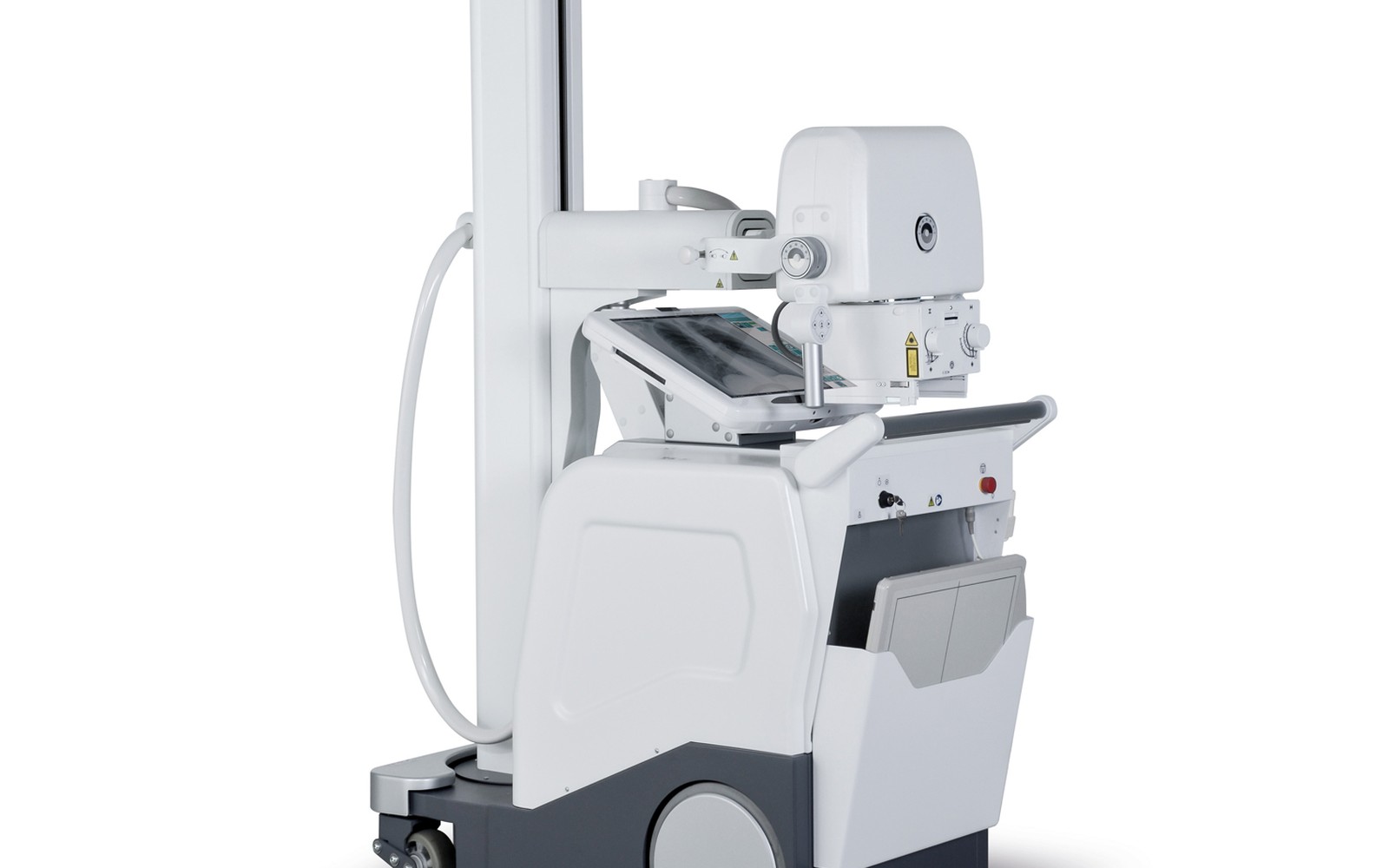
Portable x-ray machines go where patients cannot. ICU patients on ventilators, post-operative cases that should not be moved, residents in skilled nursing facilities, and trauma bay patients waiting on stabilization all need chest and skeletal imaging without a trip down the hall. The portable unit rolls to the bedside, produces the exposure, and the DR panel sends the image to PACS within seconds. That workflow runs dozens of times per day in a busy inpatient environment.
We finance portable x-ray machines for hospital departments adding capacity, for mobile imaging providers building a fleet, and for skilled nursing and long-term care operators bringing in-house imaging onto the premises. Current DR-capable portable units from manufacturers like GE, Shimadzu, Fujifilm, and Carestream typically price in the $60k-$130k range depending on generator capacity, DR panel size, and onboard image processing capability. Used units with certified DR panels often land in the $30k-$70k range, and bundled with a service contract and installation they usually clear our $50k minimum.
Portable Unit Specifications That Drive Price
The primary differentiators in portable x-ray pricing are generator capacity, DR panel configuration, and battery system. Generator capacity is measured in kW output, and a higher-capacity generator handles larger patient anatomy, thicker body parts, and faster exam sequences without thermal limits. Most current portable units operate in the 20-40 kW range, sufficient for most bedside chest and extremity studies. Units intended for bariatric patients or ICU imaging of larger anatomy benefit from the higher end of that range.
DR panels on portables are either tethered (physically connected to the unit) or wireless. Wireless flat-panel detectors allow faster setup at the bedside and eliminate the cable management issue in tight ICU spaces. They do add to the unit's price by $15k-$25k compared to a tethered panel configuration. The detector panel itself is often the most expensive component on the unit, and some facilities finance a replacement panel when the original panel degrades after heavy use.
Battery runtime matters for mobile imaging providers making multiple facility stops in a shift. A unit that depletes its battery after 30 exposures creates operational gaps that cost exam volume. Current lithium-ion battery systems on newer portables handle 60-100 exposures between charges in practice, though duty cycle and generator load affect actual performance. A mobile imaging company doing 50-80 bedside studies per provider per day needs a unit with reliable charge capacity, not just rated specifications.
Who Finances Portable X-Ray Equipment
Hospital radiology departments are the largest single buyer category for portables. Large acute care facilities may run five to ten portable units in rotation across ICU, NICU, emergency, and general medical-surgical floors. Each unit represents a capital line item that benefits from financing to preserve operating budgets for supplies, staffing, and facility maintenance. Many hospital systems finance through their GPO or preferred vendor program, but we also work directly with smaller community hospitals and critical access hospitals that do not have dedicated capital equipment financing relationships.
The other major buyer group is mobile imaging providers, which are independent companies that contract with nursing homes, assisted living facilities, and home health agencies to provide bedside radiography. These operators typically run one to four units per technologist, and fleet growth requires capital access that moves faster than the facilities' own capital cycles. We finance mobile imaging fleets as single transactions covering multiple units when the total invoice clears our minimum.
Orthopedic and sports medicine practices occasionally finance a portable for procedure room imaging, particularly for post-reduction films after closed reductions or casting. The alternative, a mini C-arm, serves a different clinical role for real-time fluoroscopy rather than static radiography, and some practices carry both.
Structuring Portable Unit Financing
Portable x-ray machines finance cleanly because they are discrete, serialized, titled assets with readily verifiable market value. A lender can identify the unit by serial number, confirm its condition, and assign a residual value, which is exactly what makes equipment financing preferable to a working capital line for this type of purchase.
Terms typically run 36 to 60 months on portables. A 48-month term is common for used units where the remaining useful life is shorter, and 60-month terms are standard for new units. Mobile imaging providers with multiple units often request matched-term structures so all units in a fleet cohort mature at the same time, simplifying the renewal or replacement decision.
For mobile imaging operators, a true equipment lease can be more tax-efficient than a loan because lease payments are fully deductible as operating expenses. The choice between a lease and a loan depends on the operator's tax situation and whether they want to carry the asset on the balance sheet. We structure both and can walk through the difference in payment and tax treatment before the application is submitted.
Fleet purchases for three or more units qualify for volume considerations. We underwrite the full fleet as a single transaction rather than writing separate tickets, which simplifies the closing and often produces a better rate structure than individual transactions. Practices that also need a dedicated fixed x-ray room at their main facility often run both a fixed room and one or two portables under separate financing lines. Facilities investing in application-only financing get the fastest route from quote to funded purchase order.
Get Portable Unit Financing
Single unit or fleet, new or used, we can build a structure that fits. Share the quote or describe what you are looking at and we will respond the same business day.
Related Financing Paths
Questions about Portable X-Ray Machines Financing
Clear answers on equipment eligibility, documentation, timing, and the financing path before you send the full file.
Can I finance a three-unit fleet under a single application?
Yes. Multi-unit purchases are handled as a single transaction when the vendor quotes all units on one invoice. We underwrite the fleet as a package, which moves faster than processing three separate applications and often results in better terms.
The DR panel on our existing portable is damaged. Can I finance a replacement panel only?
A replacement panel that invoices at $50k or more can be financed as a standalone transaction. Below that threshold, we would need to look at whether other components can be included to reach the minimum, or we can discuss alternatives.
We are starting a mobile imaging company and have no revenue yet. Can we qualify?
Startups are reviewed on a case-by-case basis. Strong personal credit on the principal owner, a completed business plan, and sometimes a co-applicant or personal guarantee support approval. Our new practice and startup financing is designed for exactly this situation.
Can I refinance a portable unit I purchased outright last year to pull cash out?
Yes. A cash-out refinance on an owned, unencumbered portable is a common transaction. We assess current market value of the unit and structure a payout. The unit stays in operation; you receive the cash.
Does a used portable need to have a current service contract to qualify for financing?
An active service contract is not required for financing approval, but it is strongly recommended operationally. Units financed without a service contract carry higher maintenance risk, which we factor into our asset evaluation. The absence of a contract does not automatically disqualify the transaction.
Bring this system into your room.
Send the Portable X-Ray Machines Financing quote, seller details, requested amount, and installation target. The imaging finance desk will map the next practical step.