

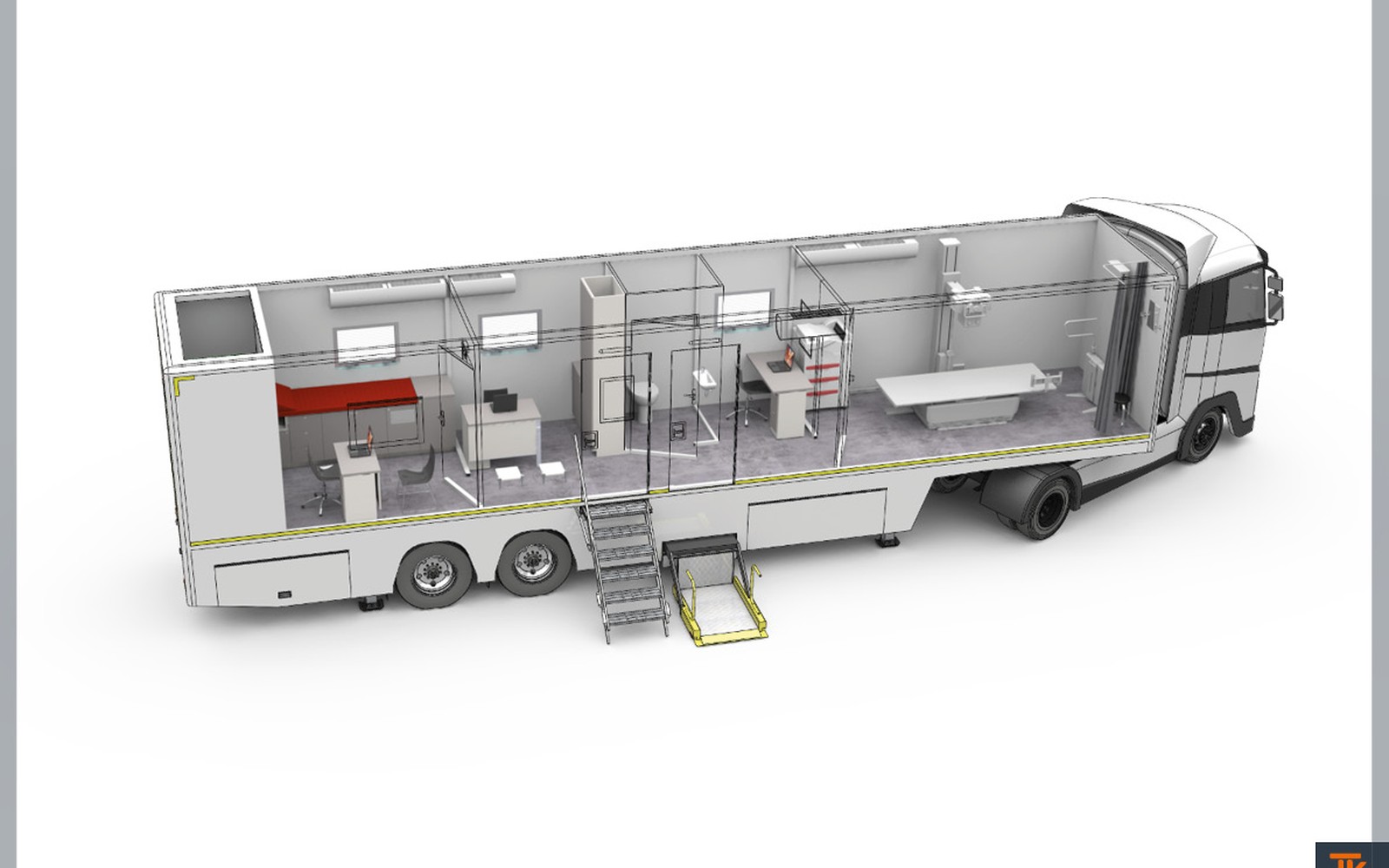
Mobile x-ray units built for facility routing are configured differently from standard hospital portables. The drive system, battery capacity, generator power, and DR panel attachment are all optimized for repeated transport in a vehicle, setup in unfamiliar rooms, and high daily study counts across multiple stops. A mobile imaging provider running six nursing home contracts in a day cannot afford a unit that needs a 90-minute charge between facilities or that fails to fit through a standard 36-inch doorway.
We finance mobile x-ray units for operators building or expanding a route-based imaging business. Whether you are adding a first unit to serve a new contract or scaling from two units to five to keep pace with signed facility agreements, the financing structure is straightforward. Our minimum is $50k, and most mobile imaging unit transactions run $70k-$130k per unit. Fleet purchases for two or more units are handled as a single transaction.
The buyer profile we see most often is an independent mobile imaging company that has secured contracts with long-term care facilities and needs the capital equipment to execute. The revenue is contracted; the barrier is equipment cost. Financing bridges that gap so the contracts can go live without depleting operating reserves. For operators evaluating the distinction between a route-optimized unit and a standard hospital portable, the page on portable x-ray machines covers the shared specification territory, while this page focuses on the route-specific differences that matter to mobile imaging businesses.
Operators Who Use Mobile Unit Financing
Route-based mobile imaging companies are the primary borrowers. These businesses contract with skilled nursing facilities, assisted living communities, memory care units, and group homes to provide on-site radiography under a per-study billing arrangement. The operator sends a technologist with the unit, performs studies, and bills Medicare Part B, Medicaid, or the facility under a contract rate. Revenue per study is predictable; the main variable is daily study volume per technologist, which improves as the route density increases.
Mobile imaging providers also service home health agencies, hospice programs, and correction facilities where patients cannot leave the premises for imaging. These contracts tend to be longer-term and provide stable, recurring revenue that supports equipment financing without the uncertainty of fee-for-service referral volume.
Hospital systems that operate satellite imaging programs, deploying technologists with mobile units to physician offices and clinics within their network, also finance mobile units. This is more common in rural health systems serving a dispersed geography where sending patients to the main hospital campus is impractical. For these buyers, the mobile unit is a service extension rather than a standalone business.
What Sets a Route-Optimized Mobile Unit Apart
Units designed for route mobility differ from standard hospital portables in a few important ways. First, they are typically rated for heavier daily duty cycles because a route tech may perform 50-100 exposures in a day across multiple locations, whereas a hospital portable may sit idle between ICU calls. Generator heat management and battery depth of discharge ratings matter more in this application.
Second, the DR panel system on route units is usually wireless, because setup time at each facility stop is a direct cost. A wireless flat-panel detector allows the technologist to position the cassette without trailing cables, which speeds throughput at each stop by several minutes per study. Over 60 studies in a day, that adds up to meaningful route efficiency.
Third, transport-ready design matters. Units that fold or collapse for vehicle loading, have weight under 500 lbs, and fit standard door widths without structural modification reach more facilities than oversized hospital-grade portables. Some mobile imaging operators also finance dedicated transport vehicles alongside the imaging equipment, though we handle the equipment transaction and refer vehicle financing separately.
Brands commonly used in the mobile imaging business include the GE Optima XR220 series, Shimadzu MobileDaRt Evolution, and Carestream DRX-Revolution. Fujifilm's FDR Go series is also popular in this segment. Refurbished units from these lines are widely available and heavily used by route operators managing multiple units on different replacement cycles.
Fleet Financing for Mobile Imaging Routes
For a mobile imaging company adding its first unit, the application-only process covers the transaction: credit application, vendor quote, and basic entity documents. For operators with two or more existing units already financed, we review the existing debt service and confirm cash flow capacity for the additional obligation. The business's study volume and per-study revenue are the key metrics here.
For fleet purchases of three to five units, we write a single transaction with a consolidated invoice. This is more efficient than multiple applications and often produces better terms. Terms on mobile units typically run 48 to 60 months, matching the practical useful life of the equipment under heavy route use. Operators who want a straightforward path to approval can use our application-only financing track, which requires no tax returns or bank statements for transactions up to approximately $400k. Separately, operators serving hospital systems through mobile satellite contracts have a different borrower profile than route-to-nursing-home operators, and we underwrite both.
Mobile imaging companies sometimes need to replace units that have reached end of useful life mid-route. A used equipment financing transaction on a certified refurbished replacement unit allows the operator to swap without interrupting service or depleting cash reserves. Replacement financing on refurbished units typically closes in the same one-to-two-week window as new equipment transactions.
For operators who own units outright and need working capital to hire additional technologists or expand into new facilities, a Sale-Leaseback Financing on owned mobile units converts asset equity to operational cash. The units stay in service; the operator makes a lease payment and uses the lump-sum proceeds for growth.
Related Financing Paths
Questions about Mobile X-Ray Units Financing
Clear answers on equipment eligibility, documentation, timing, and the financing path before you send the full file.
I have signed facility contracts but the business is only six months old. Can we still qualify?
A signed contract portfolio is meaningful supporting documentation. For newer businesses, we look at the principal's personal credit, the contract terms, and sometimes a co-applicant. Startups and early-stage businesses are reviewed case by case rather than declined outright based on age alone.
Can I finance five units under one application if I am buying from the same vendor?
Yes. Multi-unit fleet purchases on a single vendor invoice are handled as one transaction. It is more efficient and typically produces better terms than five separate applications.
Our existing unit is owned free and clear. Can we borrow against it to fund expansion?
Yes. A sale-leaseback or cash-out refinance on an owned unit is a direct path to working capital. We assess the unit's current market value and structure a payout. The unit stays in operation under a lease.
Do mobile imaging units qualify for Section 179 deductions in the same year they are placed in service?
Section 179 applies to equipment placed in service during the tax year, including mobile x-ray units financed under qualifying loan or $1 buyout lease structures. Consult your tax advisor for the specific application to your business, but the equipment category does qualify in principle.
Can we finance a refurbished unit from a private seller rather than a dealer?
Private-party equipment purchases are significantly harder to finance because there is no dealer warranty or certification backing the condition. Transactions need to go through a licensed dealer or refurbisher who can provide condition documentation, warranty, and a clean title transfer.
Bring this system into your room.
Send the Mobile X-Ray Units Financing quote, seller details, requested amount, and installation target. The imaging finance desk will map the next practical step.