

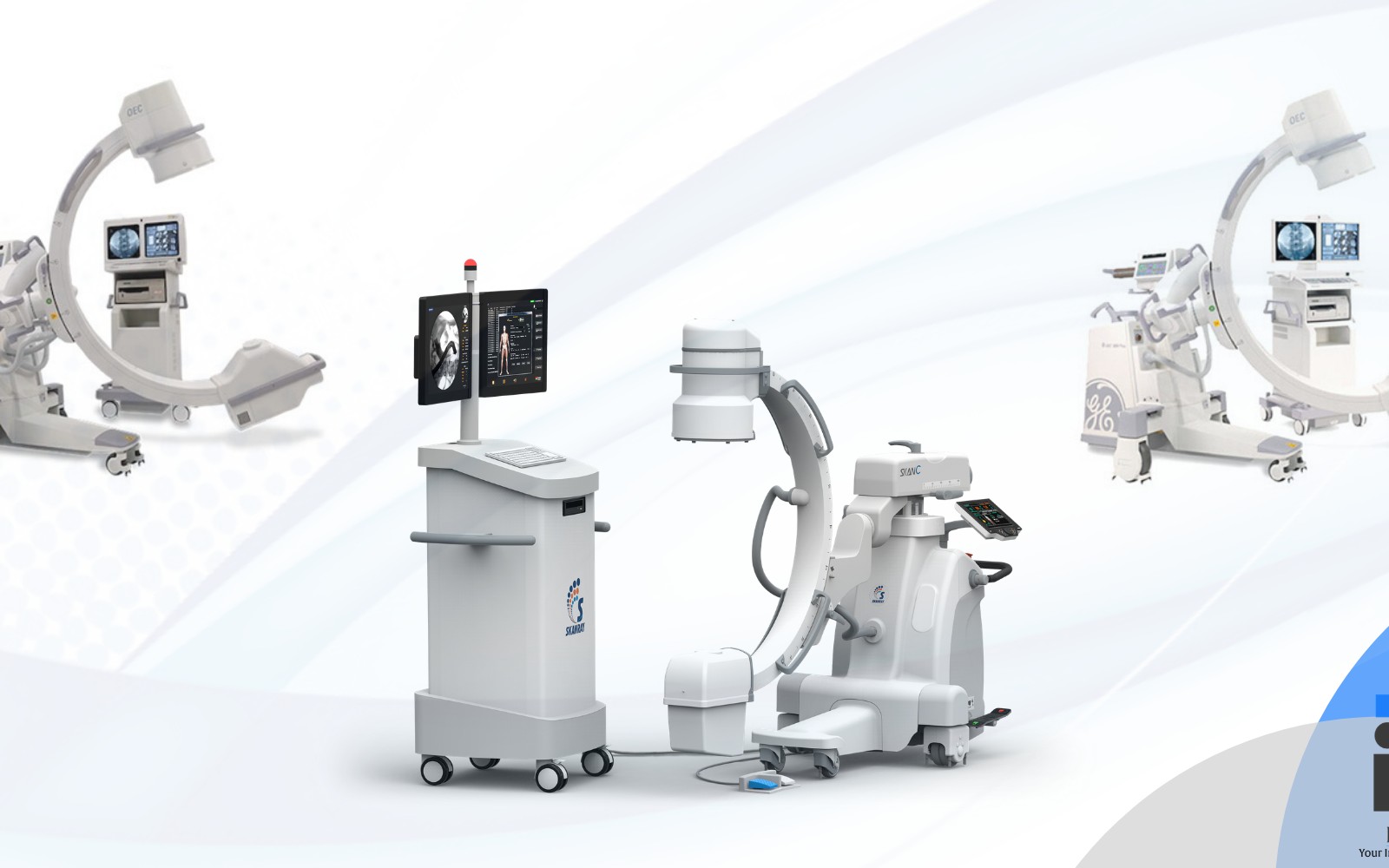
Every surgical case that requires real-time bone visualization depends on a mobile C-arm being in the room, positioned, and ready before the first incision. The gap between having that asset and not having it shows up immediately in case scheduling, surgeon satisfaction, and OR utilization rates. Mobile C-arms in the standard 9-inch and 12-inch image intensifier class run from roughly $80,000 to $200,000 for refurbished units, with new flat-panel detector models from GE, Siemens, Philips, and Ziehm reaching $250,000 to $450,000. That price range puts most C-arm purchases well into financing territory, and most buyers find a structured payment makes more sense than writing a check for an asset with a five- to eight-year useful life.
We finance mobile C-arms for hospitals, ambulatory surgery centers, orthopedic practices, and pain management clinics. Deals start at $50,000, application-only approvals are available up to approximately $400,000, and funding typically closes in one to two weeks. New and used equipment both qualify.
Standard C-Arm Configurations and What They Cost
Mobile C-arms roll into procedure rooms and operating suites on wheels, providing real-time fluoroscopic guidance without requiring fixed room infrastructure. The C-shaped arm holds the X-ray tube on one end and the detector on the other, allowing the unit to swing into multiple angles around the patient without repositioning the table. This orbital, angular, and rotational flexibility is what makes C-arms indispensable for orthopedic, spine, vascular, and pain management procedures.
Standard units use 9-inch image intensifiers for general orthopedic and pain cases, while 12-inch intensifiers or large flat-panel detectors serve vascular and complex spine cases better. The GE OEC Elite CFD and comparable units from Siemens, Philips, and Ziehm represent the current generation of flat-panel mobile C-arms. Flat-panel technology eliminates the barrel distortion inherent in image intensifiers and delivers better low-contrast resolution, which matters for vascular anatomy and complex implant placement.
Refurbished 9-inch intensifier units from the 2015 to 2020 era are widely available and represent solid value for orthopedic practices that do not require flat-panel resolution. For higher-acuity programs, a new FPD-based unit earns its price premium in image quality and reduced repeat exposures. We finance both ends of that spectrum.
Who Typically Finances a Mobile C-Arm
The most common buyers are orthopedic practices bringing cases in-house, ambulatory surgery centers adding to their OR inventory, and pain management clinics equipping a procedure room. Hospitals also finance C-arms when department budgets require spreading capital expenditures over multiple fiscal years, particularly when adding a unit to a new procedural area rather than replacing one.
For orthopedic groups that perform total joint replacements, fracture fixation, and spine decompression cases in an ASC setting, C-arm availability is not optional. A waiting list for the existing unit translates directly to case delays and surgeon frustration. Adding a second C-arm eliminates that bottleneck and the financing payment is typically recovered within the first few months of increased case volume.
Pain management clinics perform fluoroscopically guided epidural steroid injections, nerve blocks, and facet procedures that each require C-arm time. A dedicated unit in the procedure suite eliminates scheduling conflicts with a shared OR unit and supports higher procedure volume per clinic day.
Typical Terms for Mobile C-Arm Financing
Loan terms for mobile C-arms most commonly run 48 to 72 months. The right term depends on equipment age and expected useful life. A new flat-panel C-arm with a seven-year useful life supports a 72-month term without the payment running past the equipment's productive years. A refurbished 2015 unit might be better structured at 48 months to align repayment with its realistic remaining service life.
Lease structures also work well for C-arms. Fair market value leases preserve flexibility to upgrade at term end, which matters as flat-panel technology continues to improve over the next five years. Dollar-buyout leases suit buyers who want eventual outright ownership at a predictable cost. The fair market value lease and the dollar-buyout lease each carry different monthly payment levels and end-of-term obligations, so the right choice depends on the facility's long-term equipment strategy.
For deals up to approximately $400,000, application-only approvals move the fastest. Larger transactions or credit profiles that need Diligence Notes may require three months of bank statements. B/C credit is considered across the board.
Related Financing Paths
Facilities adding mobile C-arms sometimes simultaneously finance a surgical imaging table designed to be radiolucent throughout its length. Standard OR tables interfere with C-arm imaging over the lumbar spine and pelvis; a dedicated imaging table eliminates that limitation for orthopedic and spine cases. Bundling both assets into a single financing package simplifies the approval and documentation process.
Some programs evaluate mini C-arms for extremity work separately from a full-size mobile C-arm for the main OR. The two assets serve different case types, and financing them together on a single application covers both capital needs in one approval. Orthopedic offices and sports medicine practices particularly benefit from this split configuration.
Questions about Mobile C-Arms Financing
Clear answers on equipment eligibility, documentation, timing, and the financing path before you send the full file.
Can I finance a used C-arm purchased from a dealer rather than a manufacturer?
Yes. We finance C-arms purchased through biomedical equipment dealers, hospital auctions, and private sellers. A current appraisal or dealer invoice establishes value. Dealer-sourced equipment with a service history and a warranty from the selling dealer generally qualifies for the same terms as manufacturer-sold units.
Does my ASC need to be profitable to qualify, or do newer facilities get considered?
Newer ASCs and startups are considered, though the approval may require a personal guarantee or a larger down payment. Time in business and revenue history support better terms, but we can work with practices in their first two years when the equipment value and overall financial picture are strong.
Can I refinance a C-arm we already own to pull out working capital?
Yes, that is a sale-leaseback. If the unit has meaningful remaining value and your facility has been in operation for at least 12 months, a sale-leaseback converts the equipment's equity into usable cash while you continue to use the system without interruption.
We need a second C-arm quickly after a primary unit went down for service. What is the fastest path?
Application-only financing up to $400,000 moves fastest. Submit a completed application with the equipment quote and we target a decision within days, with funding typically landing within one to two weeks of approval. Complete documentation at application accelerates the timeline.
What happens to the financing if we trade in the C-arm before the loan is paid off?
A trade-in or upgrade mid-term requires paying off the existing balance, either from the trade-in credit or from the new financing. Some lenders allow roll-in of residual payoff amounts into a new deal. We can walk through the numbers on a specific upgrade scenario.
Bring this system into your room.
Send the Mobile C-Arms Financing quote, seller details, requested amount, and installation target. The imaging finance desk will map the next practical step.