

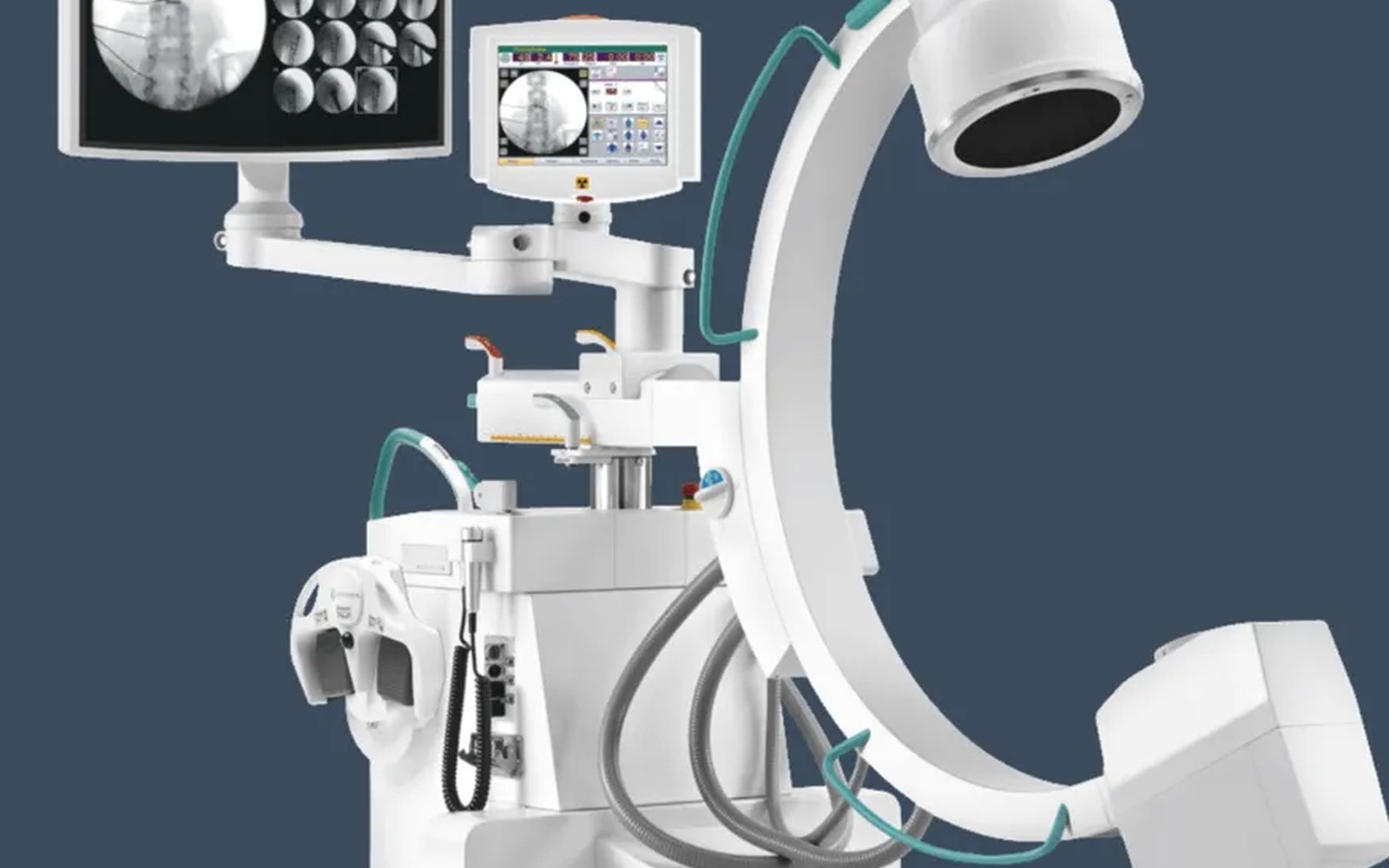
Pre-owned C-arms are one of the most active segments in the secondary medical imaging market, and for good reason. A three- to five-year-old full-size mobile C-arm from OEC, Siemens, Philips, or Ziehm Imaging still delivers the fluoroscopic image quality that orthopedic surgery, pain management, and vascular work demand, at a fraction of the cost of a current-generation unit. The practical question for most buyers is not whether a used C-arm fits the clinical need. It is whether the financing holds up across a term that makes the payment reasonable against the procedure revenue the unit generates.
We fund used C-arm purchases for surgical centers, orthopedic practices, pain management clinics, and hospital procedural suites. The minimum is $50,000; the majority of used C-arm deals run $100,000 to $300,000, covering the equipment plus service contract and transportation. Most files fund inside one to two weeks from a complete file.
How Used C-Arms Are Evaluated for Financing
C-arms carry more moving parts and wear-sensitive components than a fixed DR room, so lenders pay closer attention to condition and documentation on pre-owned units. The factors that most influence the financing structure are:
- Fluoroscopy hours: The x-ray tube accumulates wear through total fluoroscopy time, measured in hours and heat units. A well-maintained unit with documented low hours supports a longer loan term; a unit with a tube near end-of-life may carry a service contract requirement or a shorter term.
- Image intensifier vs. flat-panel detector: Older C-arms use image intensifiers, while newer units use flat-panel detectors. FPD-equipped units are preferred by lenders and buyers for image quality and resale value.
- OEM service history and calibration records: A C-arm with documented preventive maintenance from an OEM-authorized service provider presents a cleaner collateral profile than one with undocumented field repairs.
- Pulse fluoroscopy and dose management capability: These features affect clinical utility and resale demand. Units from GE HealthCare and Siemens Healthineers with modern dose management software hold value better over a 48- to 60-month term.
Used full-size mobile C-arms in the OEC 9900 class regularly finance well on 48- to 60-month terms when documented condition is strong. Buyers comparing a used C-arm against a handheld x-ray unit for extremity-only applications should weigh the fluoroscopic capability difference, since handheld units do not provide real-time imaging for guided procedures.
Which Settings Buy Used C-Arms
Ambulatory surgical settings are probably the most common buyer. A single-specialty facility doing spine, orthopedic, or pain cases needs reliable intraoperative fluoroscopy but may not have the capital budget to go new on a unit that costs $350,000 or more. A well-maintained used OEC or Siemens C-arm at $80,000 to $150,000 provides the same intraoperative guidance capability and lets the center direct capital toward other facility improvements.
Pain management clinics and interventional pain practices that perform fluoroscopically-guided injections, including epidurals, facet blocks, and sacroiliac joint procedures, are another major buyer group. These settings often run high case volumes through a single C-arm, so a unit with low tube hours and documented service history is worth a premium over a cheaper unit with unknown maintenance records. Orthopedic groups expanding into fracture fixation or adding a second procedure location fit this profile well.
Oncology and radiation centers that perform fluoroscopically-guided port placements and access procedures use C-arms across a different but consistent caseload. For primary care and family medicine practices adding on-site diagnostic radiology, a used mobile C-arm is rarely the right first acquisition, but practices with procedure-based revenue streams and a specific fluoroscopy need sometimes find used C-arms a practical fit.
Getting the Deal Done Before Someone Else Does
Used C-arm inventory moves fast. A dealer listing a well-documented OEC 9900 with a new tube at a fair price will have multiple buyers within days. The buyers who close are the ones who have financing in place or can get a credit decision quickly.
For used C-arm transactions under $400,000, we work on an application-only basis. No tax returns, no financial statements, no CPA letters. You fill out the application, we pull the credit, and we can usually have a decision within 48 to 72 hours. Once approved, the dealer confirmation and equipment details move the transaction to closing. Most buyers fund in seven to fourteen business days from a complete application.
B/C credit is evaluated case by case. A practice with a credit event in the past two years can still close on financing when the business has been operating at least two years, the unit is well-documented, and the purchase price is consistent with the market. We work with lenders who specialize in medical imaging assets, so the collateral is understood rather than penalized.
Refinancing or Releasing Equity in a C-Arm You Already Own
If your practice owns a C-arm outright, that asset may be carrying equity you can convert to working capital. A deferred-payment structure lets you acquire a replacement unit while bridging a cash-flow gap. For buyers who want to compare payment structures before committing, a deferred payment financing arrangement can let you start using the equipment while deferring the first payment by 90 days or more, which is useful for new procedure lines that need time to ramp volume.
If you originally financed a C-arm and the loan term is approaching its end, or if you want to restructure debt, we handle refinancing on existing equipment. These transactions are common when a practice has grown its caseload, needs liquidity for a facility expansion, or wants to move from a lease to an ownership structure. Practices evaluating the lease-versus-loan question on used C-arms should also look at a working capital versus equipment financing comparison, particularly if the C-arm acquisition is part of a broader practice investment in the same period.
Get Financing on a Used C-Arm Today
Inventory moves quickly in the pre-owned C-arm market. The fastest way to secure your unit is to have financing lined up before you finish negotiations with the dealer. Send us the equipment details and your application and we will move on your timeline. Apply now or call to discuss your specific situation.
Can I finance a used C-arm that comes with an expired service contract?
Yes, but we will typically ask about your ongoing maintenance plan. Some lenders require a service contract to be bundled into the transaction as a condition of approval, particularly on older units where tube replacement risk is higher. Others simply want to see the documentation on the unit's condition. We can roll a new service contract into the financing package so the monthly cost is predictable.
How does the image intensifier vs. flat-panel detector difference affect my financing options?
Flat-panel detector C-arms generally finance on better terms because the technology is more current, image quality is higher, and resale value holds better over a loan term. Image intensifier units can still finance, but terms may be shorter, typically 36 to 48 months, and some lenders request a larger advance. If you are comparing an older II-equipped unit at a lower price against a newer FPD unit at a higher price, the financing math sometimes favors the FPD unit even with the higher sticker.
What documentation do I need from the seller to get financing on a used C-arm?
At minimum we need the make, model, year of manufacture, and serial number. Service records, tube hour logs, and any recent calibration reports strengthen the file. If the unit has been refurbished, we want the refurbishment scope. For dealer transactions, the purchase invoice or equipment quote works as the document basis. Private-party and hospital liquidation purchases may require a brief equipment inspection report.
My practice has two years of history but one year with a significant revenue drop. Will that hurt the application?
It depends on the reason for the drop and whether recent months show recovery. We look at the trend in the most recent three to six months more than a one-time period. If the revenue dropped because of a specific, explainable event and the current run rate is healthy, that context matters to underwriters. We help you frame the story accurately so lenders see the full picture.
Is a used C-arm eligible for a Section 179 deduction the same year I finance it?
Generally yes. Used equipment qualifies for Section 179 as long as it is placed in service during the tax year and used for business purposes. The deduction limit and phaseout thresholds apply in the same way as new equipment. We recommend confirming with your tax advisor, but used C-arm purchases are a common Section 179 transaction in orthopedic and pain practices.
Related Financing Paths
Questions about Used C-Arms Financing
Clear answers on equipment eligibility, documentation, timing, and the financing path before you send the full file.
Can I finance a used C-arm that comes with an expired service contract?
Yes, but we will typically ask about your ongoing maintenance plan. Some lenders require a service contract to be bundled into the transaction as a condition of approval, particularly on older units where tube replacement risk is higher. Others simply want to see the documentation on the unit's condition. We can roll a new service contract into the financing package so the monthly cost is predictable.
How does the image intensifier vs. flat-panel detector difference affect my financing options?
Flat-panel detector C-arms generally finance on better terms because the technology is more current, image quality is higher, and resale value holds better over a loan term. Image intensifier units can still finance, but terms may be shorter, typically 36 to 48 months, and some lenders request a larger advance. If you are comparing an older II-equipped unit at a lower price against a newer FPD unit at a higher price, the financing math sometimes favors the FPD unit even with the higher sticker.
What documentation do I need from the seller to get financing on a used C-arm?
At minimum we need the make, model, year of manufacture, and serial number. Service records, tube hour logs, and any recent calibration reports strengthen the file. If the unit has been refurbished, we want the refurbishment scope. For dealer transactions, the purchase invoice or equipment quote works as the document basis. Private-party and hospital liquidation purchases may require a brief equipment inspection report.
My practice has two years of history but one year with a significant revenue drop. Will that hurt the application?
It depends on the reason for the drop and whether recent months show recovery. We look at the trend in the most recent three to six months more than a one-time period. If the revenue dropped because of a specific, explainable event and the current run rate is healthy, that context matters to underwriters. We help you frame the story accurately so lenders see the full picture.
Is a used C-arm eligible for a Section 179 deduction the same year I finance it?
Generally yes. Used equipment qualifies for Section 179 as long as it is placed in service during the tax year and used for business purposes. The deduction limit and phaseout thresholds apply in the same way as new equipment. We recommend confirming with your tax advisor, but used C-arm purchases are a common Section 179 transaction in orthopedic and pain practices.
Bring this system into your room.
Send the Used C-Arms Financing quote, seller details, requested amount, and installation target. The imaging finance desk will map the next practical step.