

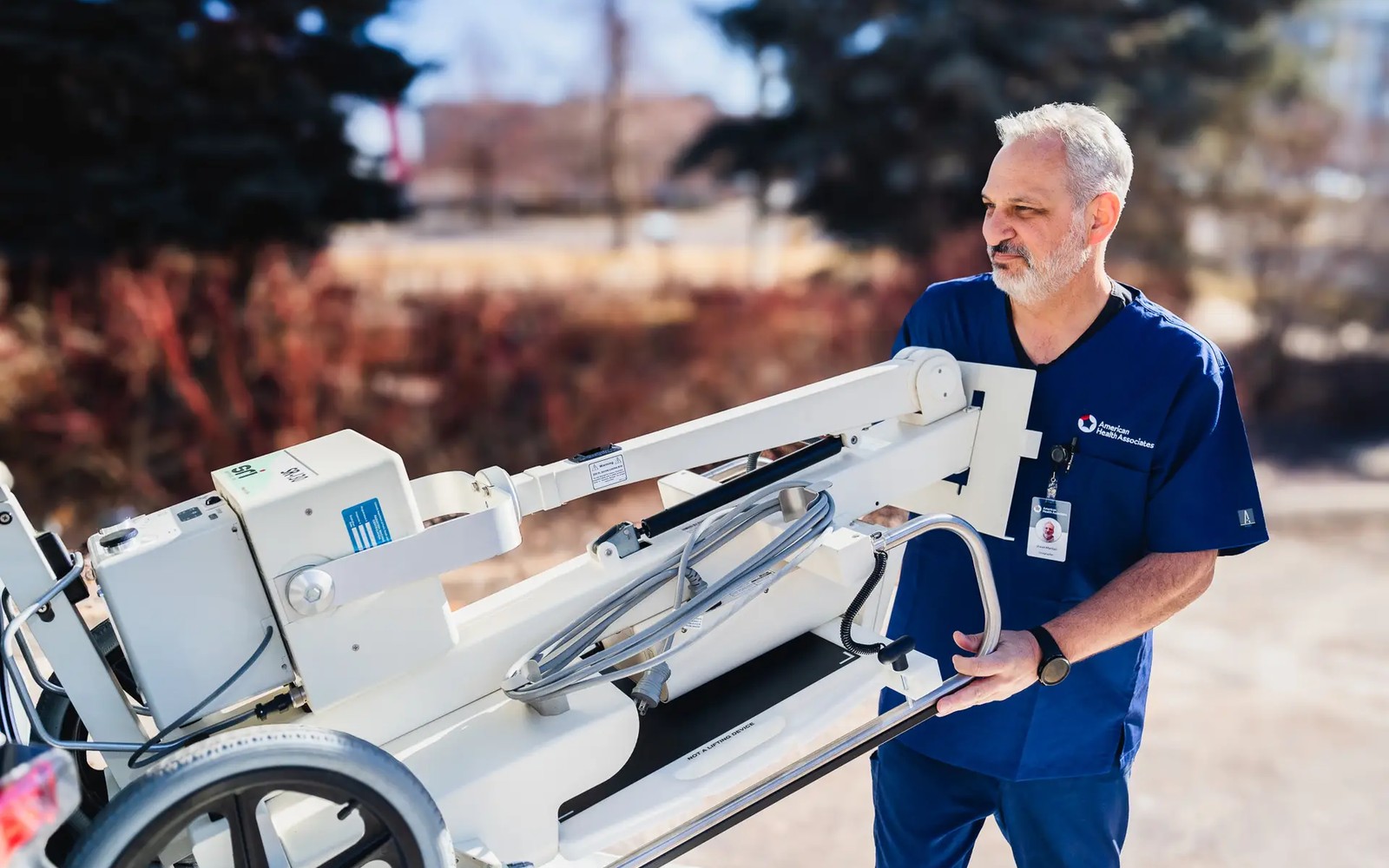
A mobile imaging business runs on vehicle reliability and image quality in equal measure. The unit that can't start the route and the detector that produces a substandard image both cost you the same thing: the contract. Mobile X-ray providers serving long-term care facilities, correctional facilities, homebound patients, and post-acute settings have learned that the equipment decision is the business decision, and the financing structure is what determines whether you can afford the right unit from the start rather than buying down and upgrading in two years.
We finance mobile imaging providers from single-van operators adding their first DR panel to established regional companies equipping a fleet of dedicated trailers. The asset class is specific enough that not every lender understands it, but we work with this market regularly and we underwrite both the vehicle and the imaging equipment without requiring two separate applications at two separate institutions.
What goes on the truck and what it costs
The core mobile X-ray purchase is a portable or mobile DR unit with a wireless flat-panel detector. The Carestream DRX-Revolution, Fujifilm FDR Go PLUS, and Shimadzu MobileDaRt Evolution are three of the most commonly specified platforms in the mobile imaging market. These units combine a generator, positioning arm, and wireless detector into a single transportable system, and they are purpose-built for bedside work in rooms without X-ray infrastructure. New units in this class run approximately $80,000-$150,000.
A mobile X-ray unit on its own is the entry point. The step up is a dedicated mobile imaging trailer, which puts a full fixed X-ray room inside a climate-controlled trailer pulled by a medium-duty truck or a sprinter van. Trailers in the mobile imaging market range from single-modality X-ray trailers at $150,000-$250,000 to multi-modality units that include fluoroscopy capability at $400,000 and above. The trailer becomes the room, so shielding and equipment mounting are engineered for the platform rather than built into a facility wall.
Van-based operations using a portable DR system with a wireless detector serve a different market segment: they are lighter, faster to deploy per stop, and better suited to routes with high stop counts and shorter dwell times per patient. The tradeoff is that van-based systems are not suitable for the same image quality or positioning range as a trailer-mounted unit for every exam type.
How we structure mobile imaging deals
Mobile imaging financing has two components that need to move together: the vehicle and the imaging equipment. In some cases the trailer itself is the imaging room, making the vehicle and the equipment a single line item. In van-based setups, the vehicle is usually titled separately and the imaging equipment is financed as a standalone package. We can handle both configurations, and for trailer-based operations we commonly combine the trailer and its installed imaging systems into one loan at a single blended rate.
Our minimum is $50,000, which covers the imaging equipment package on a portable-based van operation. For trailer-based providers, the total package commonly runs $200,000-$500,000, and we have funded deals in that range on application-only underwriting where the operator's track record and contracts support the credit. Three months of bank statements, the application, and a copy of any facility service contracts in place are the standard starting documents.
Established mobile imaging companies looking to refinance equipment they've been operating for two or three years can use equipment refinancing to lower monthly payments or pull equity for additional vehicles. A sale-leaseback on a fully paid trailer is another option for companies that want to redeploy that capital into a second route. The imaging equipment retains value well if it has been serviced, which makes these assets good candidates for refinance.
Credit and documentation realities
Mobile imaging businesses are often owner-operated, and the personal credit of the principal matters in underwriting. We work with B/C credit borrowers and we've helped operators with credit challenges get into equipment that let them build the revenue history that improves future terms. Strong facility contracts, proof of existing routes, and a clear picture of revenue per stop all help the credit case even when the personal score is not ideal.
New entrants to mobile imaging with no prior business history will face a more limited lender panel and may need a personal guarantee plus a larger down payment. That said, a mobile X-ray startup entering a market with a letter of intent from a long-term care facility is a materially different credit story than a blank-slate startup with no contract pipeline. We review the full picture, not just a score.
For operations that generate revenue on 30-to-60-day billing cycles with Medicare and Medicaid, cash timing can be tight. Deferred-start payment structures give a new route time to generate receivables before the first loan payment is due. This is not a workaround; it is a standard structure we use for businesses where revenue lags equipment deployment.
Related Financing Paths
Mobile imaging providers who expand from X-ray into portable ultrasound or portable ECG add revenue per stop without adding a second vehicle. We don't finance ultrasound here, but the imaging equipment upgrades that stay in our scope include handheld X-ray units for operators serving correctional facilities or very space-constrained environments, and replacement flat-panel detectors for established operators whose detectors have reached end of useful life.
Detector replacement is worth noting as a standalone financing item. A wireless DR panel runs $25,000-$60,000 depending on detector size and manufacturer. If you're at the $50,000 minimum and the rest of your system is still productive, replacing the detector alone rather than the whole unit can be financed as a standalone transaction and extend the equipment life by several years.
Operators expanding to a second or third route often come to us for fleet financing rather than single-unit deals. We can structure a master credit facility that covers multiple vehicles and their imaging equipment under one approval, which simplifies the paperwork considerably when you're adding routes every few months.
Questions about Mobile Imaging Providers
Clear answers on equipment eligibility, documentation, timing, and the financing path before you send the full file.
Can you finance the van or truck along with the imaging equipment in one deal?
Yes, for trailer-based operations where the trailer is the imaging room, we commonly finance the trailer and the installed imaging equipment as a single transaction. For van-based operations where the vehicle is titled separately, the van often goes through a commercial auto lender and the imaging equipment through us as a separate equipment loan. We'll tell you upfront which path makes sense for your configuration.
We have a contract with a long-term care facility group but our personal credit is around 620. Can you still help?
Yes. B/C credit is considered, and a strong facility contract is meaningful collateral context even if it isn't physical collateral. We'll want to see the contract, three months of bank statements showing revenue if you're already operating, and a complete application. The contract and your operational track record both work in your favor during underwriting.
Our wireless detector was damaged and needs replacement. Can you finance just the detector?
Yes, as long as the transaction is at or above our $50,000 minimum. A wireless flat-panel DR detector from a major OEM runs $25,000-$60,000, so depending on size and brand it may or may not meet the threshold on its own. If you're also doing other equipment upgrades at the same time, bundling them clears the minimum easily.
We are starting a mobile X-ray business and have no existing revenue. What does the application look like?
For true startups, the personal credit, personal assets, and business plan carry the most weight. A personal guarantee will be required. If you have a signed contract or letter of intent from a facility, bring that. New practice startup lenders in our network have funded mobile imaging startups specifically, but terms will be tighter and you may need a down payment of 10-20% of the equipment cost.
How does billing-cycle lag affect our ability to service a loan?
We understand Medicare and Medicaid reimbursement timing. A deferred-start structure puts your first payment 60 or 90 days out from funding, which gives you time to deploy the route and generate receivables before debt service begins. After that, the monthly payment is fixed and predictable against your billing cycle. We can model what the cash flow looks like month by month so you go in with clear visibility.
Bring this system into your room.
Send the Mobile Imaging Providers quote, seller details, requested amount, and installation target. The imaging finance desk will map the next practical step.