

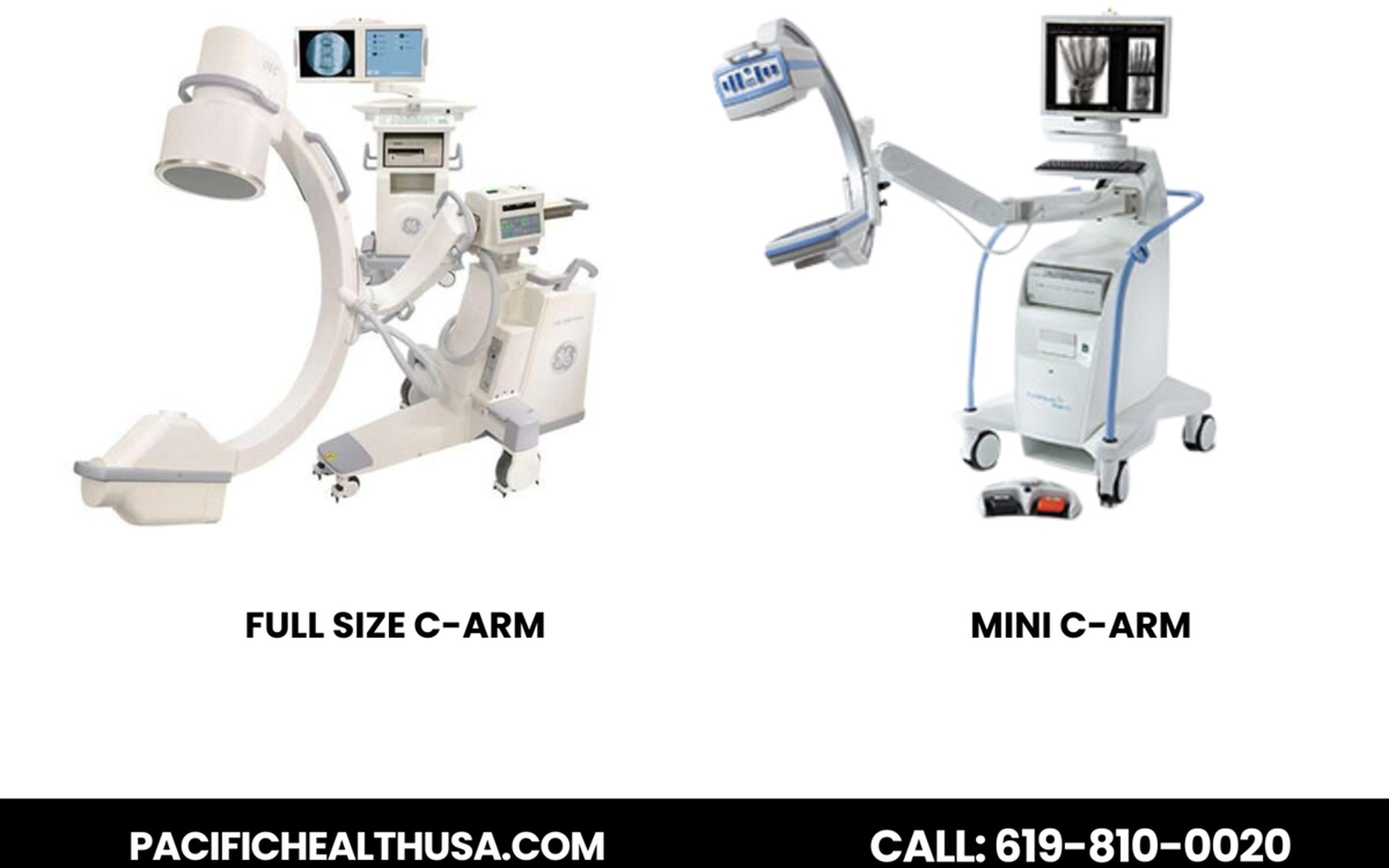
Mini C-arms handle a specific niche in the orthopedic room: distal extremity fluoroscopy for the wrist, hand, elbow, foot, and ankle without the room clearance and setup requirements of a full-size mobile C-arm. OrthoScan built a dedicated product line around this application, and the FD Pulse is their current flat-panel detector iteration, adding dose management and improved image quality to the compact platform that orthopedic surgeons and podiatrists have used for guided extremity procedures for years. Practices that perform distal extremity fracture reduction, fixation, and hardware removal in a procedure room or surgical suite without a full-size C-arm find the OrthoScan FD Pulse a practical and right-sized tool, and financing one is something we do routinely for the orthopedic and podiatry practices that buy them.
OrthoScan is a Tempe, Arizona-based company that has focused the FD Pulse specifically on extremity applications rather than attempting to scale the design into a general-purpose C-arm. That product focus is apparent in the dimensions: the FD Pulse's C-arm assembly and detector system are sized for extremity cases and are not designed for trunk or spine imaging. The image receptor is matched to the distal extremity field sizes, and the system is positioned and repositioned by the surgeon or technologist directly, without the powered drive mechanisms of larger C-arms.
FD Pulse Technical Design and Extremity Imaging Workflow
The OrthoScan FD Pulse uses a flat-panel detector rather than the image intensifier and CCD camera combination that earlier OrthoScan models and many competitor mini C-arms still use. The flat-panel design eliminates the geometric distortion (pincushion effect) that image intensifiers introduce, providing accurate geometric representation of bone and hardware anatomy throughout the field. For orthopedic surgeons confirming screw length and hardware position in small bone fixation, geometric accuracy is a meaningful clinical advantage over image intensifier mini C-arms.
The Pulse designation in the FD Pulse name refers to the system's pulsed fluoroscopy capability. Rather than delivering x-rays continuously during fluoroscopy, the FD Pulse can operate in a pulsed mode at selectable frame rates, acquiring and displaying images at intervals rather than continuously. This reduces total x-ray output during the fluoroscopy session while maintaining a usable frame rate for guidance tasks. For procedures involving prolonged fluoroscopy time or pediatric patients, pulsed fluoroscopy is an ALARA dose management tool that the FD Pulse's flat-panel detection system handles efficiently.
The workstation display on the FD Pulse is integrated into the unit and provides a touchscreen interface for fluoroscopy acquisition, image review, measurement tools, and DICOM image export. DICOM export to PACS allows the fluoroscopy images acquired during the procedure to be stored in the practice's image archive and associated with the patient's record. This is increasingly expected in practices with electronic health records and PACS systems, and the FD Pulse's DICOM compatibility supports that workflow.
The FD Pulse competes primarily in the mini C-arm market against image intensifier mini C-arms from multiple manufacturers. For practices comparing across the C-arm size spectrum, reviewing the broader mini C-arm financing overview is a useful starting point. The OrthoScan mini C-arm financing page covers the full OrthoScan product line we finance. Practices that need a larger C-arm for general surgical use should compare the Ziehm Solo FD or Ziehm Vision RFD, which are full-size flat-panel mobile C-arms for a broader procedural range.
Practices That Finance the OrthoScan FD Pulse
Orthopedic surgery practices performing distal extremity procedures in a dedicated procedure room or ambulatory surgery setting are the core OrthoScan buyer. Procedures like distal radius ORIF, metacarpal fixation, wrist arthroscopy guidance, ankle fracture plating, and distal fibula fixation are all routinely performed under mini C-arm fluoroscopy guidance. The FD Pulse's extremity-specific design fits these cases precisely, and its compact size is comfortable in the surgical room configurations these procedures typically use.
Podiatry practices that perform surgical procedures, including bunionectomy with hardware fixation, flatfoot correction, and hammertoe repair under fluoroscopic guidance, are the second significant buyer segment. Podiatric surgeons who bring fluoroscopic guidance in-house see both a workflow improvement from immediate intraoperative image feedback and a reduction in the external facility fees that come with hospital-based surgical cases. Podiatry practices that have reached sufficient surgical volume to justify the investment are a regular financing customer.
Hand surgery programs within orthopedic or plastic surgery practices are a third buyer group. The small-field, high-resolution characteristics of mini C-arm flat-panel imaging are well suited to the fine bone and hardware anatomy of the hand, and the FD Pulse's extremity-specific design is a natural fit. Ambulatory surgery centers that host orthopedic, podiatric, and hand surgery programs may finance an OrthoScan FD Pulse as a dedicated extremity C-arm separate from whatever full-size C-arm they use for spine and trauma cases.
Financing Structure and Process
OrthoScan FD Pulse mini C-arms are priced in a range that typically makes them among the more affordable flat-panel C-arm investments, with new units generally in a price range that puts the transaction solidly in the application-only category. Most FD Pulse transactions process from a completed application and three months of business bank statements with decisions in two to three business days. We finance new and refurbished FD Pulse units, and the secondary market for OrthoScan systems is active given the installed base in orthopedic and podiatry practices.
Term options for a mini C-arm in this price range commonly run 36 to 60 months. A 48-month term is a common choice that keeps the monthly payment modest while not extending the commitment too far into the technology's lifecycle. Practices that want to expense the purchase in the year acquired should review Section 179 equipment financing, which allows the purchase price of eligible equipment to be fully expensed in the placed-in-service year subject to IRS limits.
Practices with B or C credit history should review our B/C credit equipment financing program, which considers approval for practices that would not meet standard A credit criteria. Credit situations that include past tax liens, prior bankruptcies, or short operating history are all considered. The rate reflects the risk, but the goal is getting your practice the equipment it needs to support clinical and revenue growth.
Related Financing Paths
Questions about OrthoScan FD Pulse Mini C-Arm Financing
Clear answers on equipment eligibility, documentation, timing, and the financing path before you send the full file.
Can a podiatry practice with a single-physician owner qualify for OrthoScan FD Pulse financing?
Yes. Single-physician practices are a common buyer for the FD Pulse. The underwriting for a solo practitioner looks at the practice entity's bank statement activity and the physician's personal credit together. A practice with consistent procedure volume and solid personal credit from the physician-owner is a straightforward application. Practices with two or more years of operating history have the strongest position.
Is the FD Pulse DICOM compatible, and can we route images to our existing PACS?
Yes. The OrthoScan FD Pulse supports DICOM image export to a PACS or practice image archive. Confirm the specific DICOM conformance statement with OrthoScan for your PACS system version before finalizing purchase if PACS integration is a requirement. The DICOM capability allows intraoperative images to be stored with the patient record rather than existing only on the local workstation.
We currently borrow a C-arm from a local hospital for procedures. Does that history help with financing?
Borrowing a C-arm does not directly affect your financing application, but it does confirm that your practice has existing procedure volume that would support C-arm utilization. The financing looks at the practice's financial profile, not its equipment history. If your procedure volume is sufficient to justify bringing C-arm capability in-house from a borrowed arrangement, that volume should also be reflected in your bank statement revenue, which supports the financing application.
How does the OrthoScan FD Pulse compare in dose output to an older image intensifier mini C-arm?
Flat-panel detectors are generally more dose-efficient than image intensifier systems of comparable size. The FD Pulse's flat-panel combined with pulsed fluoroscopy modes provides dose management tools that older image intensifier mini C-arms typically lack. Actual dose output depends on technique and clinical use, but practices replacing an aging image intensifier mini C-arm with the FD Pulse generally see a reduction in skin dose for equivalent image tasks.
Can the financing include a service contract and any optional software?
A multi-year service contract and software options from OrthoScan can be included in the financed amount if they appear on the purchase invoice. Including the service contract in the financing spreads the cost across the loan term rather than requiring a separate annual payment. Confirm the service and software pricing with your OrthoScan dealer and include them in the financing request if you want them bundled.
Bring this system into your room.
Send the OrthoScan FD Pulse Mini C-Arm Financing quote, seller details, requested amount, and installation target. The imaging finance desk will map the next practical step.